
REVIEW · ITALY
Aquarium of Cattolica Entry Ticket
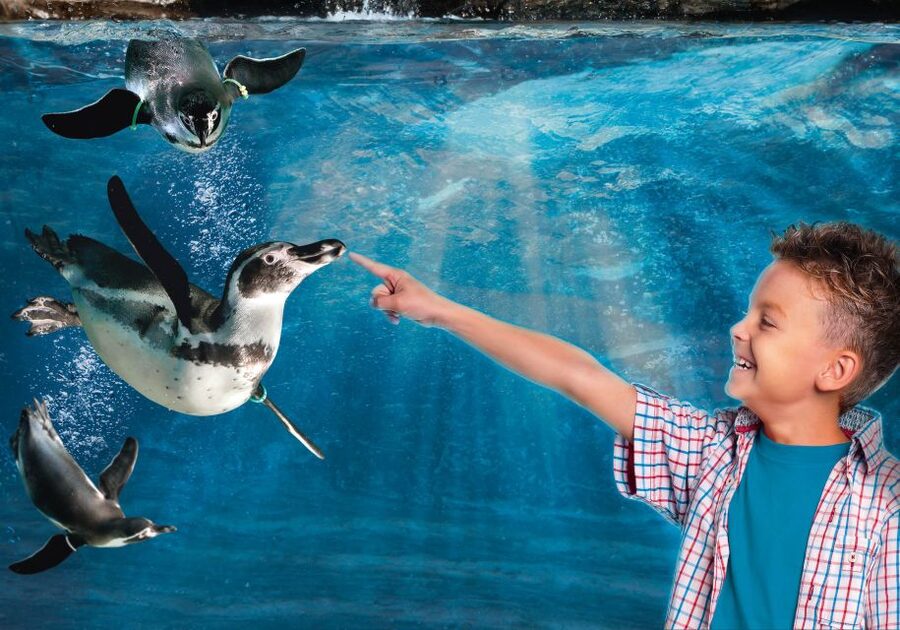
The Aquarium of Cattolica gives you a lot to see under one ticket: bull sharks, Humboldt penguins, otters, rays, and jellyfish spread through more than 100 tanks. The setting is part of the fun, too. You walk through a former 1930s marine colony designed to resemble a fleet of ships.
I like the clear four-route layout, especially the Blue marine route and the hands-on activities for children. I also like that the ticket reaches beyond fish, with reptiles, giant insects, and seasonal dinosaurs. The main drawback is that some of the science displays may feel better suited to self-guided exploration than a formal tour, since no guide is included.
Key points to know before you go
- Four color-coded routes: Blue covers marine life, Yellow focuses on rivers, Green houses reptiles, and Purple presents the Giant Insects XXL exhibition.
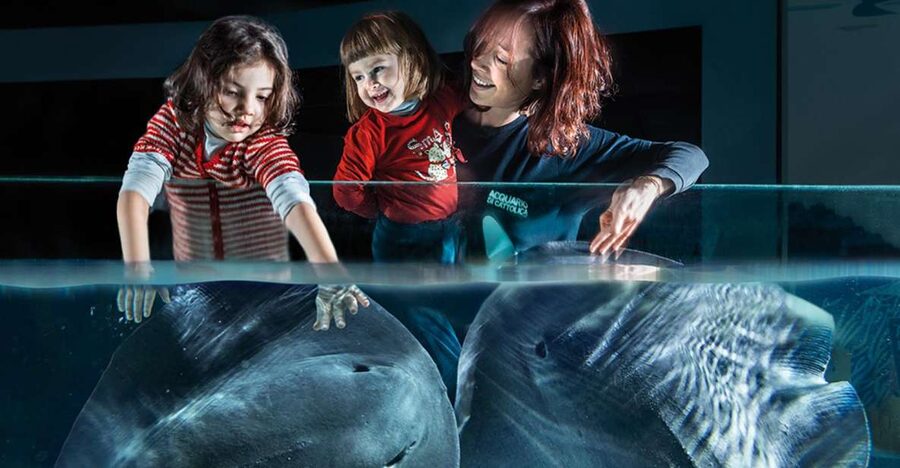
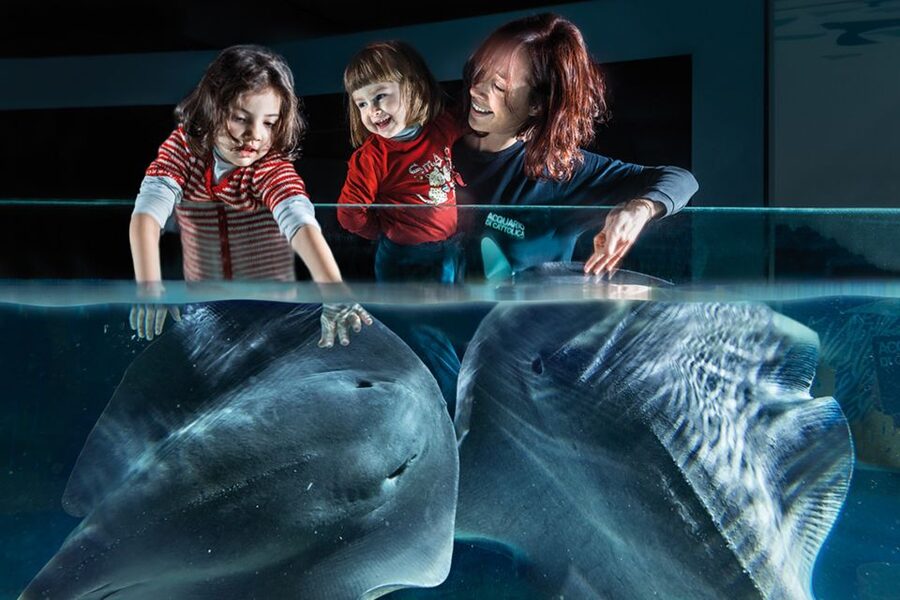
- Italy’s largest bull sharks: The aquarium presents some of the country’s biggest bull sharks, along with rays, turtles, and jellyfish.
- A strong family focus: Children can follow play trails, enter a giant shark mouth, and take part in the summer fossil excavation area.
- More than an aquarium: The Green route includes snakes and alligators, while the Purple route uses enlarged scientific models to show body structures in striking detail.
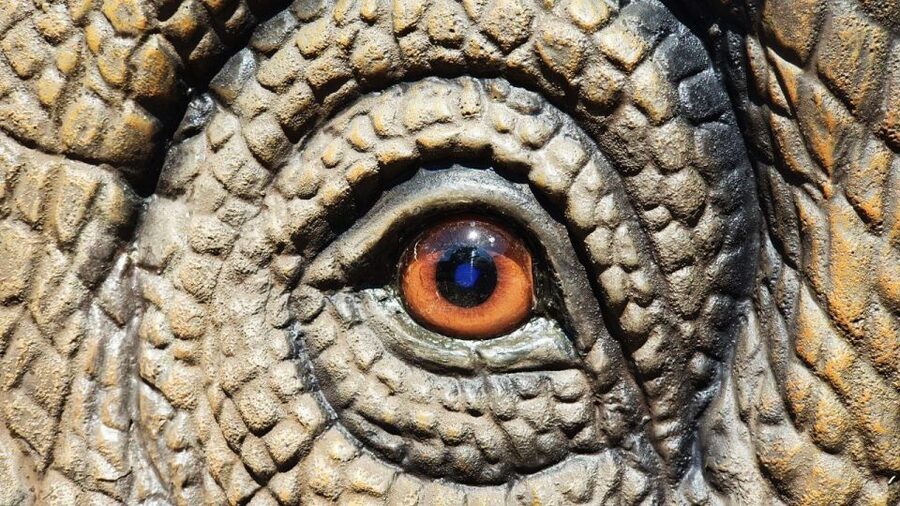
- Summer adds dinosaurs: The World of Dinosaurs includes large prehistoric models, including Tyrannosaurus Rex and a 16-meter Spinosaurus.
- Plan around feeding times: Bull shark, penguin, otter, and stingray feedings are among the best scheduled moments of the day.
A 1930s marine colony with four routes
The Aquarium of Cattolica is located at Piazzale delle Nazioni, 1A, in Cattolica, Emilia-Romagna. Before you even reach the tanks, the architecture gives the visit some character. The aquarium occupies a former marine colony from the 1930s, built with shapes that recall ships gathered in a harbor.
That setting helps the aquarium feel like more than a modern box filled with glass tanks. You move through a building with a clear sense of place, then follow a color system that keeps the visit manageable.
The four routes are marked by color:
- Blue for marine environments
- Yellow for river environments
- Green for reptiles and other land animals
- Purple for the Giant Insects XXL Edition
This layout is useful if you are visiting with children who want to choose the next section, or if you need to break the visit into shorter stretches. It also helps you understand the collection. The Blue route is the heart of the aquarium, but the other three routes keep the day from becoming a long parade of fish tanks.
The aquarium contains around 3,000 specimens from 400 species. That is enough variety to keep the visit moving, though you should not expect every display to receive the same amount of space or explanation.
More Aquarium Entry Tickets in Italy:
- Genoa: Aquarium of Genoa Entry Ticket
★ 4.5 · 10,075 reviews - Gardaland SEA LIFE Aquarium: Open Date Entry Ticket
★ 4.1 · 728 reviews - Genoa: Aquarium & Christopher Columbus’ House Entry Tickets
★ 4.4 · 258 reviews
The Blue route puts sharks and penguins first
Start with the Blue route if you want the most familiar aquarium experience. This is where you find marine environments, large tanks, and animals that most children already hope to see: sharks, turtles, rays, jellyfish, and penguins.
The bull sharks are one of the major draws. The aquarium presents them as the largest bull sharks in Italy, making this section worth slowing down for. Sharks are easy to reduce to a cartoon threat, but watching their size and steady movement through a tank gives children a more useful sense of the animal as a living species.
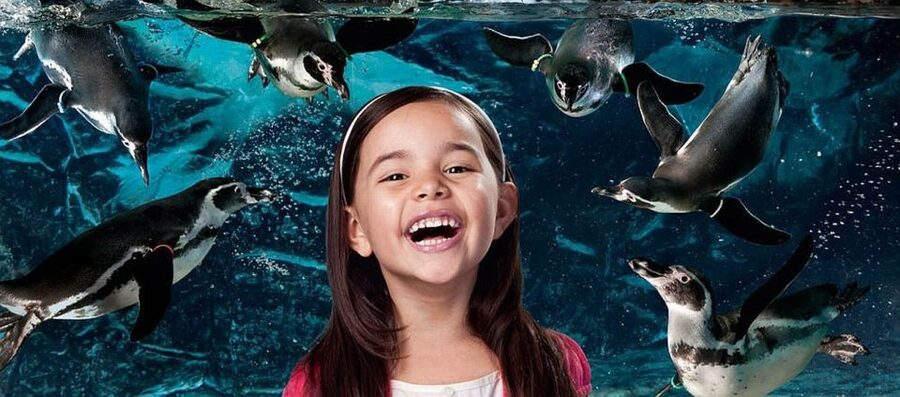
The Humboldt penguin colony is another favorite. Penguin viewing often works well for families because the animals are active and easy to watch for several minutes. Look for the feeding session in the daily schedule. It gives you a better reason to linger than simply walking past the glass.
The Blue route also includes the Plastifi-niamola area, which deals with plastic waste in the sea. This adds a clear environmental message to the colorful animal displays. It may be less entertaining than the sharks, but it gives the visit a useful edge, especially for older children.
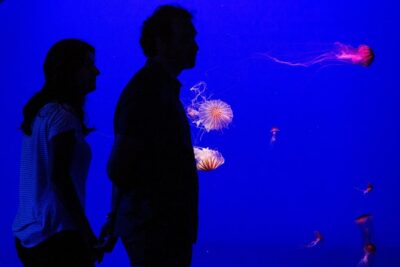
You can also expect sections with rays and jellyfish. Jellyfish displays work best when you give yourself time to notice their movement and color rather than rushing toward the next large animal. The collection includes other marine species as well, though the main impact comes from the larger animals and carefully lit tanks.
The Yellow route changes the water story
The Yellow route shifts attention from saltwater to river environments. That change matters because it shows that freshwater habitats are not simply smaller versions of the sea. They support different animals and different problems.
The aquarium’s overall collection includes otters and alligators, with several kinds of snakes and other animals appearing across the routes. If you are mainly visiting for marine life, the Yellow route may feel like a side trip. I would still include it, especially with children, because the change of setting keeps the visit from feeling repetitive.
Otters are among the animals worth timing around a feeding session. Their quick movements give this part of the visit a lively feel. As with the penguins, scheduled feeding turns a simple exhibit into an event and can help you decide where to spend your limited time.
The river section also helps broaden the educational value of the aquarium. You are not only looking at colorful animals. You are seeing how the aquarium organizes life by habitat, and you get a more complete picture of water environments.
The Green route adds reptiles and a different mood
The Green route is the place for reptiles. It includes the reptile house, with snakes, alligators, and other animals that may appeal to children who are less interested in fish.
This area has a different pace from the Blue route. Fish and jellyfish move through open water, while reptiles may remain still for long periods. That can make them harder to spot, but it also encourages you to look carefully rather than simply wait for constant action.
If your family has mixed interests, the Green route can be a useful change of rhythm. One child can focus on sharks and penguins while another waits for a snake or alligator. The aquarium also offers an additional experience called The Secrets of the Reptile House for a more exclusive observation point. The supplied information does not give a separate price or schedule for that option, so check availability before building your day around it.
Behind the Scenes is another additional experience. It is designed for closer observation and a different view of the aquarium’s work. Again, the standard entry ticket covers the four main routes, so treat these options as extras rather than part of the basic admission.
More Entry Tickets in Italy:
- Genoa: World-Famous Aquarium and Lighthouse Combo Ticket
★ 4.2 · 387 reviews - Genoa: Aquarium and FantaCinema Combined Ticket
★ 4.6 · 314 reviews - Genoa: Aquarium of Genoa & City of Children and Youth Ticket
★ 4.5 · 258 reviews - Cala Gonone: Cala Gonone Aquarium Entry Ticket
★ 4.0 · 226 reviews
Purple route turns insects into giant science displays

The Purple route is the most unusual section. The Giant Insects XXL Edition uses more than 70 three-dimensional models and exhibits, enlarged from 20 to 200 times.
At that scale, anatomical details that are normally invisible become the main subject. You can examine body parts, colors, and functions in a way that ordinary insect viewing cannot provide. The models have received scientific recognition from universities and institutions in Italy, Taiwan, and the United States, including the University of Pisa, the University of Padua, the University of Bicocca of Milan, the University of Taiwan, and the Academy of Natural Sciences of Drexel University.
This is not simply a room of oversized bugs for comic effect. The large models are meant to show how insect bodies work. For children, the exaggerated scale makes small creatures easier to understand. For adults, it is a good reminder that familiar insects have highly detailed structures that disappear at normal size.
The route also gives you a break from the most popular animal exhibits. If the aquarium is busy, the enlarged models offer a quieter way to continue learning without waiting for a perfect view at a crowded tank.
Summer adds a dinosaur plain outdoors
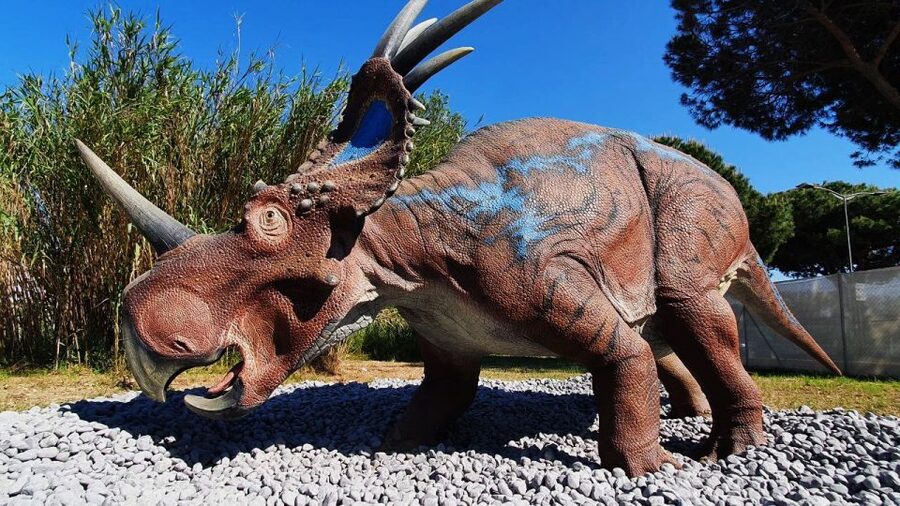
In summer, the ticket also includes the World of Dinosaurs outdoor area. It recreates a prehistoric plain with large, realistic models of reptiles that lived around 65 million years ago.
The display includes Tyrannosaurus Rex and Spinosaurus. The Spinosaurus model is described as 16 meters long, giving you a sense of scale that smaller indoor models cannot match.
The dinosaur section is especially useful for families with children who may not be equally excited by aquatic animals. It gives the day another major theme and lets you move outdoors after spending time inside.
A shaded excavation area allows children to uncover prehistoric fossils in a paleontologist-style activity. That hands-on element is more engaging than simply posing beside dinosaur models. It also gives younger children a clear task when they begin to tire from looking at exhibits.
Do not count on the dinosaur area outside the summer period. The standard information specifically includes it in summer, so check the operating details for your date before assuming it will be available.
Feeding times shape a better one-day visit
The ticket is valid for one day, and I would treat this as a full-day outing if you want to see all four routes, the dinosaur area in summer, and the scheduled feedings.
The most useful planning tip is simple: check the feeding times when you arrive. The aquarium offers feeding sessions with bull sharks, penguins, otters, and stingrays. These are the moments most likely to reward a pause, especially if you are visiting with children.
A practical order would be:
- Begin with the Blue route and note the feeding times.
- Follow the Yellow and Green routes while you wait for the next scheduled session.
- See the Purple route when you want a slower, more detailed exhibit.
- Visit the dinosaur area during summer.
- Return to the animals connected to the feeding times.
This order is not mandatory, but it prevents you from reaching the end of the visit and realizing you missed the animals you most wanted to see.
The attraction does not include a guide in the basic ticket. That gives you freedom to set your own pace, but it also means you need to read the displays and manage your own schedule. One useful point raised in the booking feedback was the lack of a guide for explanations. If you want a narrated visit, consider the additional Behind the Scenes or reptile experience, subject to availability.
What the $25 ticket is really worth
At about $25 per person, the admission is not a quick, inexpensive stop. It makes better financial sense when you use the full day and visit several routes rather than focusing only on the sharks.
The value comes from the range of experiences included in one ticket: marine tanks, river habitats, reptiles, scientific insect models, and, in summer, dinosaurs. A family can also add lunch if that option is selected at booking, which simplifies the day.
The ticket includes the World of Dinosaurs area in summer, making the price easier to justify for families who would otherwise need to pay separately for another activity. The giant insect exhibition also gives the aquarium an educational feature that many standard aquariums do not offer.
The weaker value appears if you want a guided tour or a highly structured explanation. No guide is included, and the available information does not name a guide or promise regular guided commentary. You are paying for access to the collection and facilities, not for a personal naturalist.
Children’s pricing is based on height rather than age. Children up to 100 centimeters use the infant option, while the reduced ticket applies from 100 to 140 centimeters. Measure carefully before booking, since the categories are specific.
Food breaks and access
There is an internal snack bar, which is useful for a quick pause without leaving the building. The Pesce Azzurro restaurant outside offers a more substantial option if you want to make lunch part of the outing.
If you select the ticket option with lunch, confirm exactly what that package includes when you book. The available details identify lunch as an optional inclusion but do not list a menu.
The aquarium is wheelchair accessible. That makes the attraction practical for visitors who need step-free access, although the available information does not provide a detailed route map or specify every facility.
The entry point is the aquarium itself at Piazzale delle Nazioni, 1A, 47841 Cattolica RN, Italy. There is no transport component included, so you arrange your own way to the site.
One important booking detail can easily cause trouble: tickets are valid the day after purchase. Do not assume you can buy the ticket and enter immediately on the same day. The activity is also non-refundable and cannot be canceled or modified, so confirm your date and height category before paying.
Who will enjoy the Aquarium of Cattolica most
I would recommend this outing most strongly to families who want a full day with several kinds of attractions. Children can move from sharks to penguins, from reptiles to giant insects, then to dinosaurs in summer. That variety helps when family interests do not line up perfectly.
It also suits anyone who likes a self-guided visit. You can linger at a favorite tank, skip a section that does not interest you, and use the feeding schedule to create your own plan.
The aquarium may be less suitable if you want a small, quiet collection that can be seen in an hour or two. It may also disappoint if you expect a guide to explain every habitat. The educational material is there, but you need to take responsibility for reading and timing the visit.
The penguin section is a particular strength for many families, and the shark displays provide the biggest visual impact. The Giant Insects XXL route is the surprise feature, while the dinosaur area adds the most value during summer.
Should you book it?
Book the Aquarium of Cattolica if you want a flexible, family-friendly day with marine animals plus reptiles, giant insects, and seasonal dinosaurs. The $25 price is reasonable when you use the full day, attend feeding sessions, and visit more than the main shark tanks.
Think twice if your schedule allows only a short stop, or if you need a guided explanation rather than a self-guided visit. For most families visiting Cattolica, the broad mix of animals and hands-on displays makes this a useful rainy-day or summer activity, with the penguins, bull sharks, and dinosaur area providing the strongest reasons to go.
FAQ
Where is the Aquarium of Cattolica?
The aquarium is at Piazzale delle Nazioni, 1A, 47841 Cattolica RN, Italy, in the Emilia-Romagna region.
How much does admission cost?
The listed price is $25 per person.
How long is the ticket valid?
The ticket is valid for one day. It is valid the day after purchase, not on the purchase date.
What does the standard ticket include?
It includes entry to the Aquarium of Cattolica and access to four indoor routes. In summer, it also includes the World of Dinosaurs area.
Which animals can I see?
The aquarium includes bull sharks, Humboldt penguins, otters, turtles, rays, jellyfish, snakes, alligators, and other marine and land animals.
What are the four aquarium routes?
The Blue route covers marine environments, the Yellow route covers river environments, the Green route contains the reptile house, and the Purple route features the Giant Insects XXL Edition.
Is the dinosaur area included?
The World of Dinosaurs area is included in summer. It features prehistoric animal models and a shaded excavation area for children.
Are feeding sessions available?
Yes. Feeding sessions are offered for bull sharks, penguins, otters, and stingrays. Check the schedule during your visit.
Is the aquarium wheelchair accessible?
Yes, the activity is listed as wheelchair accessible.
Can I cancel or change my ticket?
No. The ticket is non-refundable and cannot be canceled or modified.
Just added around Italy
- Wine Tasting near the Aquarium of Genoa★ 4.0 · 4 reviews
- Wine Tasting near the Aquarium of Genoa★ 5.0 · 10 reviews
- Aquarium of Genoa Ticket and Whale Watching Cruise★ 4.2 · 170 reviews
- Livorno: Aquarium Entrance Ticket★ 4.2 · 222 reviews
- Genoa: Aquarium, Galata Museum and Submarine Entry Tickets★ 4.6 · 190 reviews
- Cala Gonone: Cala Gonone Aquarium Entry Ticket★ 4.0 · 226 reviews
- Genoa: Aquarium & Christopher Columbus’ House Entry Tickets★ 4.4 · 258 reviews
- Genoa: Aquarium of Genoa & City of Children and Youth Ticket★ 4.5 · 258 reviews
Aquarium Entry Tickets, compared.
Atlanta: Georgia Aquarium Skip-the-Box-Office Entry Ticket
Read our review →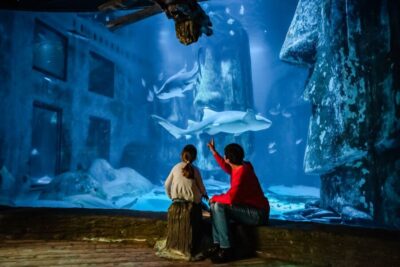
Mallorca: Palma Aquarium Entry Ticket w/ Optional 3D Cinema
Read our review →
St Paul’s Bay: Malta National Aquarium Entry Ticket
Read our review →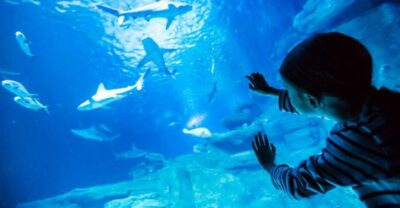
Browse the lists this tour appears in