
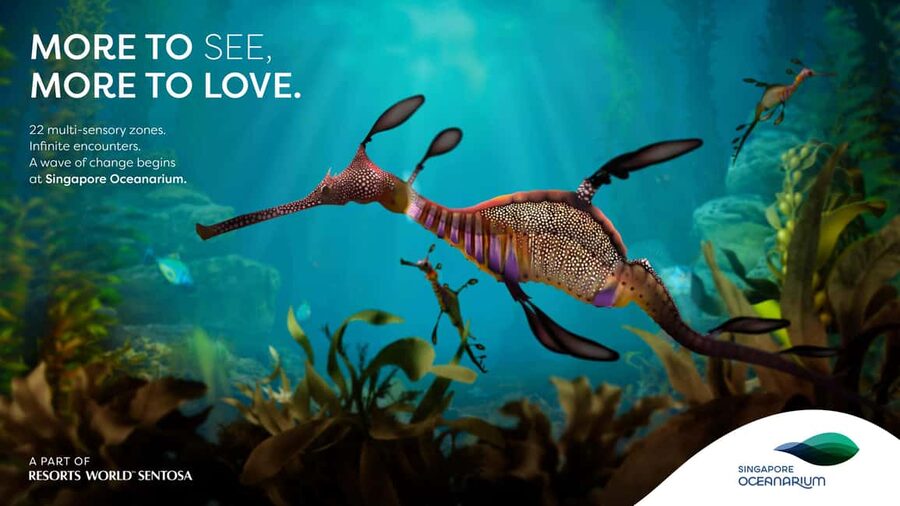
REVIEW · AQUARIUM ENTRY TICKETS
Singapore: Singapore Oceanarium Entrance Ticket
The 5,000-plus moon jellyfish are the big opening act here, floating through one of the world’s largest kreisel tanks. From there, Singapore Oceanarium moves through mangroves, fossils, deep-sea life, and a huge reef display with manta rays and zebra sharks. It is part aquarium, part science lesson, and part rainy-day escape.
I like the interactive mangrove habitat because it gives you something to do, not just something to look at. I also like the whale-fall exhibit, which explains how a dead whale can support an entire deep-sea community. The main drawback is the $43 price, especially if you only stay for a quick visit.
Key points
- 5,000-plus moon jellyfish: A large kreisel tank creates a calm, hypnotic start to your visit.
- Touch-friendly mangrove displays: Interactive features make coastal ecology easier for children and adults to grasp.
- Marine evolution exhibits: Life-sized animatronics and fossils show how ocean life helped lead to life on land.
- Whale-fall science: A deep-sea display explains how one animal can feed a whole ecosystem after death.
- 36-metre reef panel: Manta rays and zebra sharks provide the most impressive large-animal viewing.
- Plan around two and a half hours: That is a sensible visit length if you stop at the major exhibits without rushing.
Starting with jellyfish at Resorts World Sentosa
Singapore Oceanarium is located at Resorts World Sentosa, so you can build it into a larger Sentosa day. Your admission is for one day during regular park hours, but it is not valid for exclusive events. Opening times can change, so check the current hours before setting out.
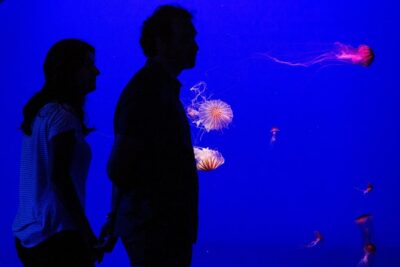
The visit begins with a strong visual display: thousands of moon jellyfish moving through a large kreisel tank. A kreisel keeps water circulating in a rounded tank, allowing jellyfish to float without being pushed into sharp corners. You do not need technical knowledge to enjoy it. The slow movement and pale bodies make this a good place to settle into the visit.
I would give this room time instead of treating it as a quick passage. The tank is the sort of display that changes as you watch. A short look gives you a pretty picture, while a longer pause lets you notice how the current carries the animals in a constant loop.
This first section also sets the tone for the Oceanarium. It is not simply a collection of tanks with labels. The displays aim to connect animal behavior, habitats, and the wider health of the ocean. That approach gives the visit more purpose than a simple parade of colorful fish.
More Aquarium Entry Tickets in the world:
- Barcelona Aquarium: Entry Ticket
★ 4.4 · 16,717 reviews - Genoa: Aquarium of Genoa Entry Ticket
★ 4.5 · 10,075 reviews - Atlanta: Georgia Aquarium Skip-the-Box-Office Entry Ticket
★ 4.7 · 3,476 reviews
Meeting Singapore’s mangrove world
The mangrove habitat shifts the focus from open water to the narrow coastal zone where land and sea meet. This is one of the most useful parts of the visit because mangroves can seem ordinary from a distance, yet they support a wide range of life and help protect shorelines.
The interactive displays are designed to be touch-friendly, so this section works well for families. You can use the features to examine biodiversity rather than simply read about it. That hands-on element helps children connect small creatures and plant life with the larger coastal system.
For adults, the value is in the reminder that ocean conservation is not limited to coral reefs or giant animals. Mangroves are working habitats. They shelter young marine life and link coastal ecosystems with the sea. The exhibit gives you a clear reason to care about a place that many people pass without much thought.
Do not expect a long nature walk or a full outdoor wetland experience. This is an indoor educational display. Its strength is clarity and interaction, not scale.
From fossils to life on land
The marine evolution section uses life-sized animatronics and fossils to show how life developed from the sea toward land. This gives the Oceanarium a wider story than the usual aquarium visit, where you move from one modern species to another without much sense of time.
The animatronics help make extinct or ancient creatures easier to picture. Fossils add the physical evidence. Together, they give you a simple way to follow a major scientific idea: life on land has strong roots in aquatic environments.
I especially like this section for anyone who asks how fish, amphibians, reptiles, birds, and mammals fit into the story of evolution. You will not get a university lecture, but the combination of objects and full-size figures makes the subject more approachable.
This is also a good pause between the living habitats. Some visitors may prefer the moving animals, while others will appreciate the change of pace. If your children are losing interest in conventional signs, the large animatronic forms may draw them back in.
Whale falls and the surprising life of the deep sea
The whale-fall display tackles one of the ocean’s stranger natural events. When a whale dies and sinks to the seafloor, its body can support a succession of organisms. What looks like an ending becomes a food source for an entire deep-sea community.
This exhibit is valuable because it changes the way you think about death in nature. The ocean floor is not empty, and it is not cut off from the rest of marine life. A whale fall creates a temporary habitat, with different stages of life making use of it over time.
The exhibit’s deep-sea setting also provides a useful contrast with the bright reef displays elsewhere. You get a sense that the ocean is not one uniform world. Light, pressure, temperature, and food supply shape very different communities.
Some of the subject matter may be too abstract for very young children, especially if they want constant movement. Still, the whale-fall story is one of the most memorable science lessons here. It is unusual, easy to explain, and tied to a real ecological process.
More Entry Tickets in the world:
- Atlantis Aquaventure Ticket (with options for Aquarium), Dubai
★ 4.5 · 4,679 reviews - London: SEA LIFE Entry Ticket
★ 4.4 · 3,428 reviews - Mallorca: Palma Aquarium Entry Ticket w/ Optional 3D Cinema
★ 4.5 · 3,076 reviews - London: Madame Tussauds, London Eye & SEA LIFE Combo Ticket
★ 4.7 · 3,009 reviews
The 36-metre reef panel
The largest visual payoff comes at the 36-metre-wide panel, where reef manta rays and zebra sharks move through the water. The width matters. Instead of peering through a small window, you can watch large animals cross a broad field of view.
Manta rays bring the graceful movement. Zebra sharks add a more deliberate, bottom-oriented presence. Seeing both in the same large setting helps you compare how different animals use the water around them.
This is the place to slow down. Find a comfortable position and watch the tank rather than snapping a quick picture and moving on. One recent visit took about two and a half hours in total, and sitting near the large tank with a snack was specifically suggested as a worthwhile way to spend time. That advice makes sense. A major aquarium window rewards patience.
The area is also useful when different members of your group want different things. Children can watch for animals passing close to the glass, while adults can simply enjoy the scale and movement. The display is likely to be the strongest reason for aquarium fans to choose this ticket.
How long you need and what the ticket covers
The ticket costs $43 per person and covers admission to Singapore Oceanarium for one day. It does not cover personal expenses, so snacks and other purchases are separate.
At that price, value depends on how you use the visit. If you spend only an hour moving quickly from tank to tank, the ticket may feel expensive. If you take time with the jellyfish, use the mangrove displays, read the evolution material, study the whale-fall exhibit, and sit at the large reef panel, the cost is easier to justify.
A realistic visit is about two and a half hours, based on the time needed to walk through the displays at a comfortable pace. You could spend less time, but the Oceanarium’s strongest features are designed for stopping and watching. It is not a place where rushing improves the experience.
The one-day validity gives you some flexibility during regular operating hours, though the ticket does not provide a special event entry. Since hours may change without notice, confirm the schedule before you go. Direct redemption at Singapore Oceanarium keeps the arrival simple: proceed to the venue rather than meeting a guide elsewhere.
Who will get the most from Singapore Oceanarium
I would recommend this experience to families, aquarium fans, and anyone looking for a solid indoor activity in Singapore. The mix of touch-friendly displays, large animals, fossils, and clear ecological stories gives different age groups something to follow.
It also suits a rainy day well. One February visit took place during wet weather, when an indoor attraction offered a practical break from Singapore’s climate. The Oceanarium is not only useful when the weather turns poor, but it becomes more valuable then.
Children who like animals will find plenty to watch, while older children and adults can spend more time on evolution and conservation. The format also works for mixed groups because you can move at your own pace. There is no guide and no fixed group itinerary, so you are free to linger at the displays that interest you.
I would be more cautious if your main aim is a short, low-cost attraction. At $43, this is not a casual ten-minute stop. You should be ready to give it a meaningful part of your day.
Conservation, research, and the bigger purpose
Singapore Oceanarium presents itself as an ocean institute, not just an entertainment venue. Its stated aims include marine education, research, conservation, and the protection of threatened species. The exhibits support that message by showing how habitats connect and why less familiar animals and environments matter.
The venue also has a Research and Learning Centre for conservation, research, and community work. Its building is certified Green Mark Platinum Zero Energy by Singapore’s Building and Construction Authority and operates fully on solar power.
That detail will not change what you see in the tanks, but it adds useful context. The building itself is part of the conservation message. You are being asked to think not only about marine animals but also about how institutions can reduce their own environmental cost.
The Oceanarium’s partnerships and professional memberships also point to a serious education and conservation role. It is accredited by the Association of Zoos and Aquariums and is a member of the World Association of Zoos and Aquariums and the Southeast Asian Zoo and Aquarium Association. Those affiliations do not guarantee that every display will suit every visitor, but they help explain the venue’s wider work.
Practical details before you go
Admission is non-refundable, so check your date and plans before purchasing. The Oceanarium is wheelchair accessible, which makes it a practical choice for visitors who need step-free access, though you should still follow posted guidance inside the venue.
Follow all rules and signs during the visit. Ignoring posted instructions can lead to injury or removal from the venue. Regular park hours apply, and entry is not valid for exclusive events.
The Oceanarium will be closed to the public on June 13, 2026. If your visit is near that date, confirm the schedule carefully.
No guide is provided, and no guide name is listed. That is not a problem for most visitors because the ticket is designed for independent exploration. It does mean you should expect to read, watch, and interact at your own pace rather than receive a spoken explanation.
Should you book Singapore Oceanarium?
Book it if you want a substantial indoor attraction with more going on than colorful fish tanks. The jellyfish, mangrove displays, marine evolution section, whale-fall story, and 36-metre reef panel give you a well-shaped visit, and the large tank is worth lingering over.
I would skip it if you want the cheapest possible Sentosa activity or only have a short gap in your schedule. At $43, the ticket makes the most sense when you can spend around two and a half hours and take time with the science.
For families, rainy-day planners, and visitors who enjoy thoughtful aquarium displays, I consider it a good use of part of your Singapore day. Go slowly, save time for the manta rays and zebra sharks, and bring enough patience to let the animals come to you.
FAQ
Where is Singapore Oceanarium located?
Singapore Oceanarium is located at Resorts World Sentosa in Singapore.
How much does admission cost?
The admission ticket costs $43 per person.
How long is the ticket valid?
The ticket is valid for one day during regular park hours.
What does the ticket include?
The ticket includes admission to Singapore Oceanarium.
Are personal expenses included?
No. Personal expenses, including other purchases made during the visit, are not included.
Is Singapore Oceanarium wheelchair accessible?
Yes. The activity is wheelchair accessible.
Is the Oceanarium open on June 13, 2026?
No. Singapore Oceanarium will be closed to the public on June 13, 2026.
Just added around the world
- Zanzibar: Horseback Riding and Turtle Aquarium Visit★ 4.3 · 4 reviews
- Zanzibar: Jozani Forest, Kuza Cave & Salaam Cave Aquarium★ 4.1 · 6 reviews
- Zanzibar: Nungwi Mnarani Aquarium Feed and Swim with Turtles★ 3.0 · 3 reviews
- From Orlando: Clearwater Beach and Marine Aquarium Admission★ 5.0 · 7 reviews
- Wine Tasting near the Aquarium of Genoa★ 4.0 · 4 reviews
- ZANZIBAR: Mnemba island, Baraka aquarium and spice farm★ 5.0 · 3 reviews
- Veracruz: Panoramic Sightseeing City Tour and Aquarium★ 3.7 · 3 reviews
- Veracruz: 5-Attraction Tour with Aquarium and Boat Tour★ 4.2 · 11 reviews
Aquarium Entry Tickets, compared.
Atlanta: Georgia Aquarium Skip-the-Box-Office Entry Ticket
Read our review →

Mallorca: Palma Aquarium Entry Ticket w/ Optional 3D Cinema
Read our review →
St Paul’s Bay: Malta National Aquarium Entry Ticket
Read our review →
Browse the lists this tour appears in